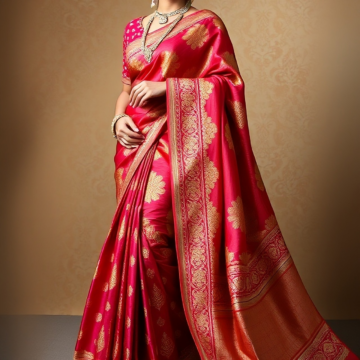
Karva Chauth falls on 29th October 2026, and for millions of married women across North India, it is one of the most emotionally rich days of the year — a sunrise-to-moonrise fast kept for a husband’s wellbeing, closed with a shared thali, a sieve, and the first glimpse of the moon. It is also, quite naturally, a day when the saree you choose matters. You will be in it from the pre-dawn sargi through hours of fasting, an evening puja with other women in the family, and a flurry of photographs the moment the moon appears. A handwoven Banarasi silk saree — with its quiet sheen, its red-and-gold symbolism, and its sheer occasion-worthiness — remains the most-loved choice for exactly this kind of day.
If you are beginning your search, here is a practical, no-fluff guide to choosing, styling, and caring for a Banarasi silk saree for Karva Chauth 2026.
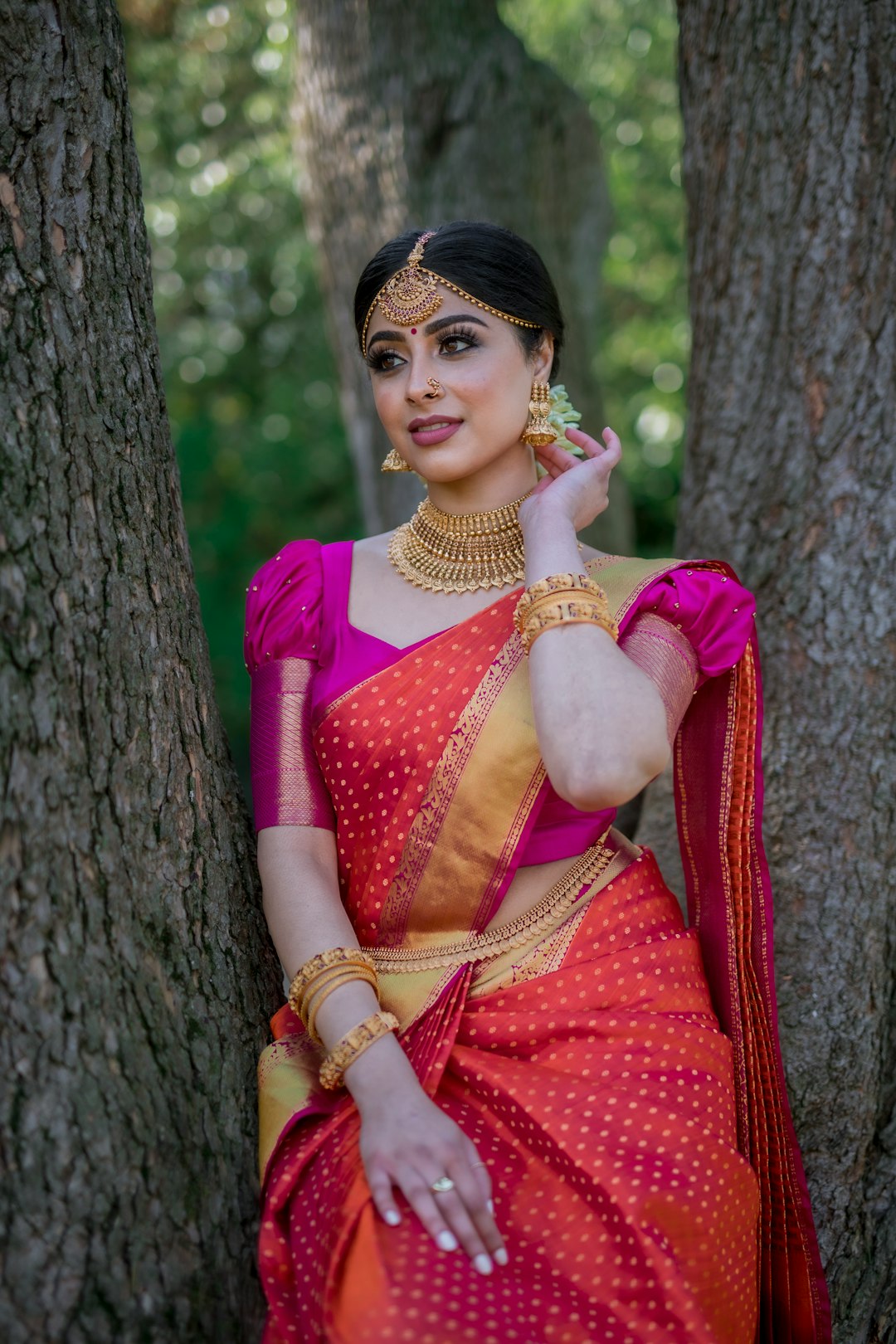
Photo by Sabesh Photography LTD on Unsplash
Why a Banarasi Silk Saree Feels Right for Karva Chauth
Karva Chauth is a vrat built on devotion and patience — a thread of intention held from morning to moonrise. There is something fitting about wearing a fabric that carries the same quality: a Banarasi silk saree can take a weaver in Varanasi anywhere from a few days to several weeks on the loom, depending on how intricate the zari work is. That unhurried, handmade character is part of why the saree feels emotionally appropriate for the day, not just visually festive. It is a garment made with the same patience the vrat asks of you.
Choosing Your Fabric: Soft Silk, Katan Silk, or Chiffon
Not every Banarasi weave suits every kind of day, and Karva Chauth is a long one — you are in the saree for the better part of 14–16 hours, often on an empty stomach. Fabric choice is where comfort and elegance need to meet.
Soft Silk is the most forgiving option for a fasting day. It drapes close without feeling heavy, breathes reasonably well through a long evening indoors, and still catches the light beautifully in photographs — an easy first pick if this is your first time shopping specifically for the festival.
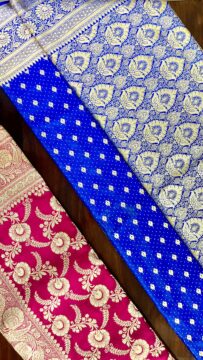
Katan Silk is the more traditional, richer-bodied weave — pure silk warp and weft with dense zari borders and a pallu that holds its shape beautifully for the puja thali moment and the photographs that follow. It carries more weight, so it suits women who are used to draping silk sarees for long stretches and want the fullest, most heirloom-like look.
Chiffon Banarasi sarees are the lightest of the three and drape with a soft fluidity that’s kind to a fasting body. If you’re managing the fast alongside young children, guests, or a lot of moving around the kitchen before the puja, a chiffon Banarasi gives you festive richness without the physical weight of pure silk.
The Best Colours for Your Karva Chauth Saree
Red remains the classic Karva Chauth colour, tied to suhaag and worn with sindoor, bangles, and a bindi — but it is far from the only option. Deep maroon, gulabi (rani pink), and marigold-gold are all considered equally auspicious and photograph beautifully under diya and string lights during the evening puja. Many women now also choose a red-and-gold or maroon-and-gold combination Banarasi saree, which keeps the traditional colour story while adding the shimmer of zari brocade that a plain silk in the same shade wouldn’t have.
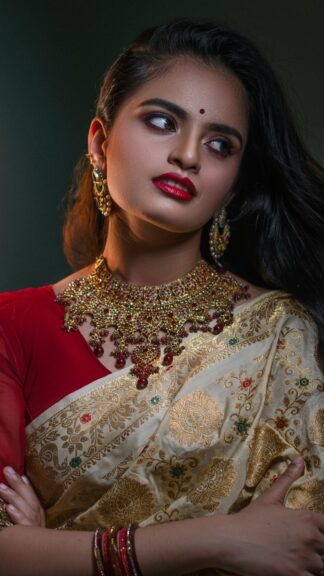
Photo by Ricky Shirke on Unsplash
Draping and Styling for the Day
Because you’ll be on your feet for hours before you’re even seated for the puja, drape practicality matters as much as look. A few tips that genuinely help:
- Pin the pallu at the shoulder rather than leaving it loose — it stays photograph-ready through the evening and won’t need constant adjusting during the thali and aarti.
- Keep 2–3 safety pins at the waist pleats; silk sarees, especially Katan, hold pleats well but a long, active day benefits from the extra security.
- If you’re wearing chiffon or soft silk, a well-fitted silk-cotton petticoat close to your waist size keeps the pleats from slipping as the evening goes on.
- Choose a blouse you can comfortably sit and eat in once the moon appears — full sleeves or elbow-length in a contrasting or gold-tissue fabric both work well with a Banarasi silk and photograph nicely against the saree’s zari.
Jewellery and Blouse Pairing
Banarasi silk already carries visual richness in its woven zari, so jewellery works best when it complements rather than competes. A traditional choker or a single statement necklace, jhumkas, a maang tikka, and your regular suhaag symbols (mangalsutra, sindoor, bangles) are usually enough. If your saree has a heavily worked pallu and border, let the neckline stay relatively simple and put the emphasis on bangles and the mehendi that most women get done a day or two before.
Caring for Your Banarasi Silk Saree
A well-kept Banarasi silk saree can be worn for decades and often becomes something passed on, so it’s worth treating it properly from the very first wear:
- Dry clean pure silk (Katan Silk especially) rather than washing it at home; the zari threads can tarnish or the silk can lose its sheen with regular water washing.
- Store it wrapped in a soft muslin or cotton cloth, not in plastic — silk needs to breathe, and plastic can trap moisture and yellow the fabric over time.
- Refold along different lines every few months if the saree is in long-term storage, so the zari and silk don’t crease permanently along one fold.
- Iron on a low, silk-safe setting, ideally with a thin cotton cloth between the iron and the zari border, to keep the metallic thread from losing its shine.
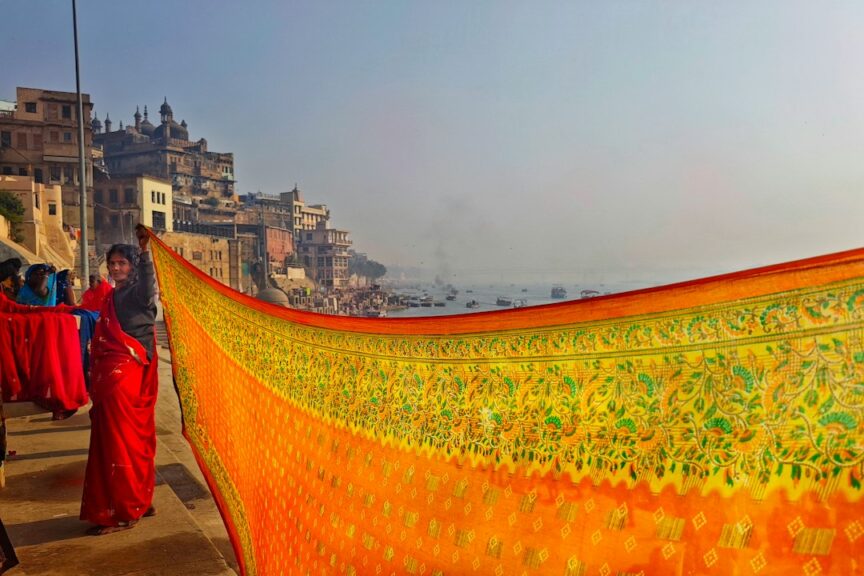
Photo by Dibakar Roy on Unsplash
How to Spot an Authentic Handwoven Banarasi
With so many power-loom imitations sold under the “Banarasi” name, it’s worth knowing what to check before you buy. Genuine handwoven Banarasi silk shows small, natural irregularities in the weave that a machine-made saree won’t have; the zari, especially real or high-quality tested zari, has a warmer, slightly muted glow rather than a flat, uniform shine; and the reverse side of the pallu should show the same motif clearly formed, not just loose threads. Buying from weavers or brands rooted in Varanasi — where the craft itself originates — is usually the simplest way to be sure of what you’re getting.
Whether you lean toward the richness of Katan Silk, the everyday comfort of Soft Silk, or the light drape of Chiffon, the right Banarasi saree for Karva Chauth is ultimately the one that lets you move through a long, meaningful day comfortably — and still feel like yourself when the moon finally rises. You can browse our full handwoven collection in the shop to find the weave and colour that fits your Karva Chauth 2026.